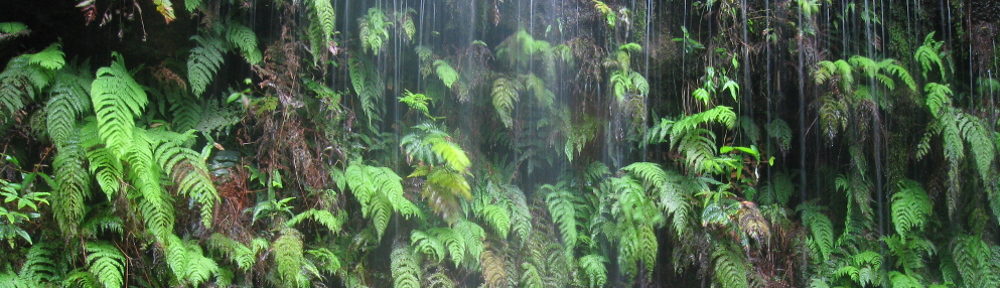
“Many of the exercises—and most of the ideas—arose from my time in nature. Thank you to the more-than-human world: my inspiration, my refuge, and my first love”.
Although I drew on established research for the book, the core lessons came from the more-than-human world. The book is structured around the Three Keys to Nature Connection: slow down, get curious, and use all your senses. These Three Keys came to me on a nature walk, arriving complete as if dropped into my mind by another intelligence.
“All truly great thoughts are conceived while walking”.
Nietzsche
I write about the importance of storytelling: “A story forms an invisible thread connecting past to present, and present to future.” I illustrate this through stories woven into the text, notably glimpses into prehistoric life. These tales reveal moments in the lives of Nu and Fa, parents of two children. Several chapters feature the family; in most cases, I had a clear purpose in mind. For the ‘Use All Your Senses’ chapter, my idea felt thin. Inspiration came during a quiet walk in the woods. Standing still, I listened, and all my senses awoke: I heard silence, felt the breeze, and smelled the subtle scent of the trees. This is how it was for our ancestors, free from the barrage of sensory noise we face. Without sensory overload, they honed their senses to a sharpness we can only imagine. Nature gave me an insight into my imaginary family’s world, which I’ve tried to share on the page.
The book contains over 60 exercises, most of which are directly inspired by experiences in nature. Typically, I am inspired by my engagement with the non-human world, and then I consider how to help others have similar experiences. Sometimes a ‘conversation’ with the spirit of place guides this process. I know the human perspective well—and the spirit of place reveals the deeper reality we often overlook. It might say, through symbol, feeling, or inspiration, ‘It’s like this.’
Have I managed to translate the wisdom of the more-than-human world into words? I hope so.
Humans have been on the planet for 300,000 years, and for 99.9 per cent of that time, we’ve lived in intimate contact with nature. But the vast majority of us have forgotten how deep that relationship was and have fallen for the lie that we’re not part of nature. This tragic disconnection has dire consequences, not least the ongoing climate and diversity crises. There’s also significant evidence that our loss of nature connection has negatively impacted mental health.
At least part of the solution to the triple crisis of mental health, climate, and diversity is rediscovering our relationship with nature. To that end, I’ve spent decades searching for ways to help people awaken to a deeper connection with nature—reading books, training with teachers, and immersing myself in practice. Approaches such as ecotherapy, forest bathing, Deep Ecology, mindfulness, and environmental psychology each offer value, but none have fully resonated with me.
In late summer of last year, I was out on a day-long walk when everything suddenly fell into place. I realised that there are just three simple keys to nature connection: slow down, get curious, and use all your senses. Ever since I developed this model, I’ve been testing it in my nature connection workshops and my personal practice. I reckon it’s pretty much foolproof! This model is as simple as it is powerful. What’s more, it provides a structure that all the other precious teachings I already have can hang on.
I don’t have the space to consider every model I know, but there’s one that invites comparison because it claims to offer Five Pathways to nature connectedness. This is one of the best-known models, based on research by environmental psychologist Miles Richardson and his colleagues (Lumber, Richardson, and Sheffield, 2017). I was aware of Richardson’s model when I developed the Three Keys, but it isn’t obviously influenced by it. I wondered if my model, which is simpler and isn’t based on psychology research, is as robust as his? Let’s see!
The two models map the same territory: our relationship with the other-than-human world. But they do that mapping in different ways.
Richardson’s Five Pathways are:
Contact. This involves engaging with the natural world through the senses.
Beauty. Take time to appreciate natural beauty. This can be through appreciating nature itself or through the arts.
Meaning. Think about what nature means to you. Reflect on how nature resonates with your life and values.
Emotion. Open yourself to experiences of awe, joy, wonder, and peace in nature. Reflect on your feelings about nature.
Compassion. What can you do for nature? Recognize your kinship with other living beings. Embrace a moral and ethical concern for the natural world.
My Three Keys cover a lot of the same ground, but they work best when taken one step at a time. Slowing down is essential for a deeper connection to nature, and all Five Pathways depend on it. In our modern lives, we’re often so busy that we barely even notice nature. First of all, pause and give yourself space to truly be in nature, rather than rushing through it.
My second step is to get curious. Opening up your curiosity invites you to explore your emotional resonance with nature, wonder about meaning, and notice beauty. It also encourages greater engagement with others—human or otherwise—which facilitates compassion.
My third key is to use all your senses, which aligns with the first of the Five Pathways, ‘Contact’.
Every element in both models overlaps with the rest. Any one of the Five Pathways will support the others, and many nature connection practices will involve more than one of them. For instance, a simple daily practice like noting ‘three good things in nature’ can involve contact, beauty, and emotion. It’s the same with each of the Three Keys: they’re mutually supportive. For example, when you start to get curious, you’re likely to use your senses more and will often slow down. Likewise, sensory awareness is a mainstay of mindfulness, which is the essence of slowing down.
To some degree, at least, my Three Keys encompass all Five Pathways. A careful reader might think that the Three Keys don’t particularly facilitate compassion, the fifth of the Pathways. I agree, but as you’ll see at the end of my post, there’s a twist.
While these two models share some similarities, they operate in distinct ways. The language is particularly relevant. All Three Keys are verb phrases, whereas the Five Pathways are all nouns. Verbs are more direct, and the Three Keys are invitations to embodied action. In contrast, Richardson’s nouns present abstract categories. This highlights how the Three Keys work. Each one invites you into an experience, and while you’re having that experience, you encounter each one of the Five Pathways.
These two models complement each other: The Three Keys are accessible and action-oriented, while the Five Pathways provide theoretical conceptual depth and structure.
My new book, Nature Connection: Remembering Wholeness, uses the Three Keys to provide a practical guide. I’ve included nearly 70 exercises, most of which are linked with one of the Three Keys. As is often the way with projects like this, the book spoke back to me. As I wrote what I thought was the final chapter, something fresh emerged. I realised that the Three Keys open a doorway to awe and gratitude, which in turn inspires compassion towards others and the natural world. On paper, the Three Keys don’t especially deepen compassion, but experientially, they most certainly do.
I gave my presentation on ‘Sacred Ecology’ at the very first international conference on Pagan Studies in September 1994. Over thirty years later, I found myself quoting from it at an interdisciplinary discussion on ecosophy organised by Interstices: Center for Transversal Thinking. Ecosophy is a term coined by Arne Naess, and further developed by Félix Guattari, to describe an environmental philosophy of ecological harmony.
Environmental philosophy has been around for half a century and I created a website called The Green Fuse to try to make sense of it all. I was rather unkind about environmental philosophy in ‘Sacred Ecology’, claiming that it’s fixed in a philosophical tradition that’s at root of the ecological catastrophe. Is that fair?
As I prepared my talk for Interstices, I began to reevaluate Naess’ Deep Ecology. I found clear parallels between his concept of ecological ‘Self-realization’ with my experiential iceberg model. For Naess, self-realization involves a “deepening of the self” that enables us to “see ourself in others” (Naess, 1988). He contrasts this wider self with with the egocentric “ ‘narrow’ self” (ibid.). I was delighted to see parallels between Naess’ ‘narrow’ and ‘wider’ self with my ‘shallow and ‘deeper’ self. In both cases the deeper, wider self is “conscious of our intimate relation to something bigger than our own ego” (ibid.). Had I been too dismissive of Deep Ecology all those years ago?
The whole point of the Interstices gathering was to explore across disciplines. Exploration typically involves challenge and discovery; I had plenty of both! Several participants provided an Indigenous perspective and it became clear to me how very Eurocentric Naess’ work is. His understanding of ‘nature’ goes back to the Ancient Greeks at least, but it isn’t self evident. Like many other Indigenous peoples, the Inuit don’t even have a word for ‘nature’. Furthermore, Naess’ core principle that we will care for ‘nature’ if we widen our sense of self seems strangely individualistic: The “protection of free nature is felt and conceived of as protection of our very selves” (ibid. My emphasis).
Comparing Naess’ Deep Ecology with Indigenous animist principles will make my point clearer. Animism recognizes that human primates are part of a wider community of beings. It isn’t about identifying with the other than human, but acknowledging relationships. Relationships emerge between beings and entail gratitude and reciprocity. As Robin Wall Kimmerer notes, many Native peoples have something fundamental in common: “we are rooted in cultures of gratitude” (2020).
Animist thinking offers a profound challenge to Naess’ Deep Ecology and Western environmental philosophy in general: I’ve concluded that these philosophies are, after all, tied into the roots of our catastrophe. Where does this leave my experiential iceberg model? I’ve identified clear parallels with Naess, so is it also tainted? The experiential iceberg is a powerful model of Western consciousness, so perhaps it’s no surprise that it reflects Naess’s work. However, it’s very flexible and can help us understand animism.
All of my thinking is influenced by the very Western ideologies I critique, but I believe that the kind of embodied knowing I extolled in ‘Sacred Ecology’ offers a radically different perspective. Therein lies hope.
What is embodiment, and how can we deepen our embodied experience? These fundamental questions have fascinated me for decades. I was curious to know what other people thought about them, so I invited some key thinkers and practitioners to explore them on my podcast. I planned to do one episode, but the subject proved so compelling that it became three. A wide range of perspectives are represented: academia, coaching, embodied practice, activism, environmentalism, mental health, life and death.
A key theme for me, and a personal fascination, is how interwoven we are as embodied beings. This theme resonates with many of us, as our culture often encourages a sense of being disembodied. We are dangerously out of touch with our embodiment, and several contributors agree that that is the root of many crises we face.
Glen Mazis, a Merleau-Ponty scholar and a published poet, expresses concern about the prevalence of a ‘disembodied culture’ that prioritizes mental manipulation over connections with others and the environment. Charlene Spretnak, a co-founder of Ecofeminism, highlights the “extraordinarily relational nature of being”.
In the latest episode, I speak to three Indigenous spiritual leaders and hear that theme again:
“We are not separated from nature, we are nature”, and yet “we are very disconnected from this consciousness, this awareness”.
Shaneihu Yawanawá
Albert Einstein wrote much the same: “A human being is a spatially and temporally limited piece of the whole, what we call the “Universe.” He experiences himself and his feelings as separate from the rest, an optical illusion of his consciousness” (1950).
One of our most brilliant scientists confirms the wisdom of ancient Indigenous cultures, philosophers, artists, embodiment practitioners, activists and spiritual leaders!
And yet, as Plant Medicine guide Wachan Bajiyoperak says, “We are sleeping deeply”. The message here is clear: Although we are nature, we’re caught in an optical illusion of disconnection. I do not doubt this illusion will destroy us if we fail to feel our way out of it.
As Glen Mazis says, “you can have all the concerns you want about global warming and its effect on the economy and all its other dangerous effects. But if you don’t feel the connection to the environment, if you don’t feel the wonder of the trees that are blowing in the wind out my window, or you don’t feel the wonder of the plants and the earth and all these other things or the creatures around us, you’re trying to make up for some deficit that you’ll never be able to make up. And we’ll never really care for the earth in the way we should”.
So what do we do? The solution is both simple and oddly challenging. Martika Gomez explains that we have to build a deeper relationship with Mother Earth, and we begin to do that when “we give back to her in a symbolic way, just to have that connection, to honour you know, to know that she’s alive, and that the waters, the rivers are alive. When we give an offering of love with that consciousness, that we are having that relationship, we’re respecting it, the world will be so different, you know, we wouldn’t have all the problems we’re facing right now”.
Philip Shepherd says something closely related:
“what the body most deeply feels is the present. It feels the earth, it feels the breeze, it feels the sounds, it feels the world around it as it is unfolding in this moment. And I think what the body most deeply realizes is that everything is alive”.
Our culture finds this hard to grasp because it’s caught up in the illusion of disconnection: We can’t escape the illusion because it stops us from seeing the way out!
But everyone I’ve interviewed talks about pathways of connection: mindfulness, dance, interoception, psychedelics, ceremony, nature connection, and Focusing. These practices offer a pathway from the illusion of disconnection to a new but ancient consciousness. All you need to do is start.
I leave the last word to Shaneihu Yawanawá:
“This is a very good moment for us to awake … everyone can contribute to this transition. There’s no excuse. Everyone needs to do her or his part”.
I’ve been writing about animism for years, and I sense that it’s an idea whose time has come. Animism has never gone away for Indigenous peoples, of course; it’s those of us in the Global North who lost the plot. But perhaps there’s an animist awakening coming.
Earlier this month, I read the news that Traditional Māori and Pasifika leaders had signed a declaration that granted legal personhood to whales. Crucially, this opens the way to discussion with governments across the Pacific to create a legal framework of protection for whales and a $100 million fund backs that. Reactions in the media have been positive. The reason, I suspect, is because animism makes sense to us. The evolutionary psychologist Bruce Charlton suggests that we are born animists; it’s “the ‘natural’ way of thinking for humans”.
Orion magazine recently hosted a conversation between Sumana Roy and Mary Evelyn Tucker about how spiritual traditions can reconnect us to the more-than-human world (The Rites Of Nature). Sumana Roy, author of the non-fiction book How I Became a Tree, explained the importance of inviting plants to a traditional Hindu wedding. Roy emphasises that we exist in a living earth community. She referenced the work of scientist Jagadish Chandra Bose, who, in the 1900s, argued that plants may be sentient. More recent research supports this idea, with some leading plant scientists claiming that plants can distinguish between ‘self’ and ‘non-self’ (Witzany & Baluška, 2012).
Rachael Petersen contributes a different perspective in her article Zen Mind, Vegetal Mind. Reflections on Buddhist practice and plant science. Petersen considers contemporary and traditional discussions in Buddhism about plants. Are they sentient? Do they have Buddha-nature? Petersen concludes that “not only do plants have a spiritual life, they are the spiritual life”, adding that “through deep practice that we may hear the voice of plants ‘with our eyes’.”
That intriguing suggestion echoes a recent experience of mine. I’ve been experimenting with super-slow-motion videos of water, including one of a river on Dartmoor. As I watched one of these videos, it occurred to me that the spirit of this place – the genius loci – was communicating through the mesmerising patterns of light and shade. Is this the voice of the more-than-human ‘speaking’ through an image?
How did your holiday celebrations go? Whether you marked Hanukkah, Yule, Guru Gobind Singh’s Birthday, Christmas or something else, ritual played a key role. Even those who count themselves secular have their rituals around this time. It could be decorating the Christmas tree, baking a special cake or lighting a candle.
Rituals include a wide range of practices from the everyday to the esoteric. They’re a fundamental part of human culture and one of the embodied pathways of connection. But how do rituals work? More importantly, why do they sometimes fail? Most of us have endured an ’empty ritual’, an old tradition that’s lost its power. A graduation, wedding or funeral marks a transition, and such rituals function as social markers however the participants experience them. But the real work of a ritual lies in its impact on us. Did the wedding serve to change the new couples’ perception of themselves? Did the funeral contribute to the process of grieving? Such changes happen below the level of conscious experience, changing the what or how of our embodied knowing.
This is the aspect of ritual that inspired me to study embodied knowing. Through my ritual experience, I came to “a deep knowing of the sacredness of the Earth that is more than just an intellectual awareness of the facts & figures about species decimation & habitat loss” (Harris, 1995). By allowing us to think “through and with the body” (Raposa, 2004: 115), rituals can provide access to what I call the ‘deep body’, a level of awareness where embodied thoughts and thinking function.
We create new rituals all the time, and if we do that with thought and clear intentions, they can be transformative. The transformative power of ritual is part of the inspiration behind a project I’ve just launched.
The Element Festivals
Many people use the classical Greek Elements of Air, Water, Fire and Earth in their spiritual or psychological practice, and our lives depend on them. The Element Festivals provide an opportunity to celebrate these archetypal forces. Each Element has one day a year dedicated to it, a time of honouring and celebrating its power and our relationship with it. Individuals or groups will mark each Festival with rituals, creating artwork, having a party or simply enjoying that particular Element. I’m especially encouraging people to bring an environmental dimension to their celebrations, but even if participants choose not to explicitly do something to help the planet, the ritual of celebration will help deepen their connection to nature.
Can psychedelic experiences enhance our connection to nature? So far, the evidence is a resounding ‘yes’, and some philosophers suggest that careful administration of psychedelics could be a valuable way to catalyse the development of environmental virtues (Kirkham & Letheby. 2022).
‘Nature connectedness’ is much more than simply spending time in the park: It measures how strongly a person identifies with nature and can be defined as a sense of ‘oneness with the natural world’ (Mayer and Frantz, 2004). Nature connectedness is very beneficial for humans; it helps give our lives a deeper sense of meaning and supports personal growth. People who deeply appreciate our connection to the wider natural world are more likely to protect it. So nature connectedness isn’t just good for us; it’s good for the planet.
I often saw evidence of a deeper nature connection in my work on psilocybin retreats, and that’s been backed up by the research (Gandy et al., 2020). There’s some evidence that psilocybin is especially powerful in this regard and can elicit robust and sustained increases in nature connectedness (Forstmann et al., 2003). Psychedelic experiences and nature connection are woven together like threads in a tapestry. The weave is tight, but I’ll tease out a few of those threads.
Both psychedelic experience and nature connection can catalyse feelings of awe and increase our capacity for mindfulness. Many Indigenous peoples use psychedelics as a sacrament. In most cases, they are animists with a profound respect for the more-than-human world. Robert Greenway is a pioneer ecopsychologist who used to take people on ‘wilderness’ treks. After many years of leading these adventures, Greenway concluded that extended time in nature could engender an altered state that closely parallels the psychedelic experience. There are several aspects to this altered state, but fundamentally it involves “feelings of expansion or reconnection”, which Greenway unhesitatingly describes as “spiritual” (Greenway, 1995). (See The Wilderness Effect).
A pattern is emerging in this tapestry; connectedness. In my recent interview with Sam Gandy, he suggested that we can see “connectedness itself being a fundamentally interconnected or interwoven construct” and that cultivating nature connectedness can deepen connectedness to self, others and the wider world (Embodied Pathways).
It’s quite common for people to have mystical experiences while using psychedelics, and nature mysticism is ancient and global. Are they the same? It seems so: Feelings of interconnectedness, unity, sacredness, and a transcendence of time and space characterise mystical experiences emerging from both psychedelics and nature connection.
“To see a World in a Grain of Sand And a Heaven in a Wild Flower, Hold Infinity in the palm of your hand And Eternity in an hour”.
William Blake, Auguries of Innocence
I would quote Blake’s words in the introduction to the nature connection exercise I used to lead at psychedelic retreats. They are a perfect example of nature mysticism and could also speak of aspects of the psychedelic experience.
The conversation about psychedelics and nature connectedness is ongoing and may be crucial in these times of climate crisis. If you’d like an accessible deep dive into this fascinating subject, listen to my interview with Sam Gandy on Embodied Pathways.
I’ve been very involved in work and research on psychedelics over the last year or so. I’ve mentioned psychedelics in a few of my posts here, but I wanted to flag up a couple of presentations. The first is online next week: I’m talking about Sacred Ecology: The Psychedelic Connection at the Embodied Spirituality event.
Back in 1996, I wrote Sacred Ecology. Now, nearly 30 years on, I’ll be exploring that territory through a psychedelic lens. Psychedelic experiences can be profoundly spiritual, often inducing mystical experiences. What does this tell us about the power of awe, nature connection and the future of therapy?
I started working as a Facilitator on psychedelic retreats in The Netherlands last year. This involved spending hours supporting people on their psychedelic journeys as well as helping them to prepare for and integrate the experience. Nature connection is widely recommended for psychedelic preparation and integration and as this is a particular interest of mine, I’ve begun to develop and refine this approach. In this presentation at the University of Exeter, I talk about the work I’ve done on psychedelic retreats and explain how we might apply ecotherapy to integration.
Gautama Buddha spent most of his time in nature. He taught in nature, meditated in nature and, most importantly, became enlightened in nature. So how come most mediation today happens indoors? We’re missing something crucial and in my interview with Claire Thompson – author of Mindfulness and the Natural World and The Art of Mindful Birdwatching – we begin to unpack what’s so special about practising mindfulness in nature.
Research from the University of Derby suggests that simply being in nature is enough to produce a more mindful state (Richardson and Hallam, 2013). Claire’s experience helps explain why that might be:
“there’s something about being outdoors in nature that holds us within our own bodies a little bit more, because it’s stimulating our bodies with natural scents and sounds and sights. It’s almost like that’s what our bodies evolved to experience or to be taking in, in terms of a sensory experience. I guess to be put back into that environment can feel quite holding for people, because it holds us within our own physical experience a little bit more, which actually naturally takes us out of the narratives of our mind and our thinking and into the body”.
Our human minds label and judge in a way that nature doesn’t: Nature just is and makes no assessment or allowances. That provides a space where you can be whoever you are without labels. Claire found that facilitating mindfulness workshops in nature had a significant impact on the participant’s experience:
“It felt like being in nature opened people up and because of the lack of judgement in that space it felt like people were more able to be themselves and more able to trust that whatever experience they were having, it was okay and opened up a curiosity about their experience in a way that perhaps in some of the indoor spaces where I’d practiced mindfulness, for example, I didn’t feel the same thing. It didn’t feel like the same thing happened, or there was just something – maybe an authenticity about it as well, like people feeling allowed to be themselves more when they’re out in the wild or out in touch with the natural world”.
That can be profoundly liberating and can help to free us from our habitual attachment to the ‘self’. Our intuition – that the self is an identifiable thing, a unique and irreducible nugget of selfhood – is simply wrong; neuroscience and mindfulness agree on that. It’s not that you don’t exist! Of course you do, but the self is a process, not an object. Calling myself ‘Adrian’ helps maintain the illusion, but my ‘self’ is more like a verb than a noun: ‘I’ am the process of ‘selfing’ that extends beyond the envelope of skin around my body. John Danvers writes of how “[m]indful mediation enables us to experience the self as a process that extends out into the world”. (2016; 164).
Tucker’s Pool, Lydford Gorge, Devon
Mindfulness practice facilitates the experience of awe and that powerful emotion has been very significant for Claire.
“It’s an experience of going beyond myself, as in beyond my sense of being a separate self and being taken into something that is greater than that, and connects me to something bigger”.
The experience of awe can reveal that we are, in truth, part of “a dynamic web of interdependence” (Macy, 2007; 32). In the industrial North, it’s very easy to forget that, but the longing for connection doesn’t go away. Claire describes how the feeling of awe can feel:
“… like a longing for a connection that I’ve lost, or, arguably, we’ve lost. And in those moments of awe you get a glimpse of reconnecting with that. And there’s a sense of abundance that comes with that feeling. … a feeling of generosity and more openness to others and more creativity, and kind of takes you out of that kind of fixed separate sense of self, which sometimes can keep us a little bit stuck”.
We tend to think of ‘enlightenment’ as an event that happens to a few special individuals, but it’s not that simple. Perhaps it makes more sense to think of enlightenment as an experience anyone can taste for a moment. Claire suggests that enlightenment comes in “those moments of connection to something greater where our sense of self disappears or it feels like our sense of separate self disappears”. That resonates with me. I’ve certainly had moments like that and even though they quickly pass, you are changed forever. Crucially, these experiences of deep connection happen “in our day to day lives – you don’t have to be in the middle of a beautiful rain forest in Cuba, it could just be with somebody you love, or it could just be on the way to work noticing something that kind of takes you out of yourself or a piece of music that you’re really taken by.”
These sacred moments can come to anyone. At the time – and in our faltering attempts to articulate them – they seem otherworldly: “It feels otherworldly, but it’s also very human”.
The nineteenth century bequeathed two opposing models of how nature works. The most influential version is a certain interpretation of Darwin’s Origin of Species characterized by Herbert Spencer. It emphasizes individual competition and frames nature as like a gladiatorial battle for survival, “whereby the strongest, the swiftest, and the cunningest live to fight another day” (Spencer, 1888). Spencer was influenced by Thomas Malthus, who mistakenly predicted that population growth would lead to global catastrophe. Common to both ideologies is an assumption of scarcity rather than abundance.
Peter Kropotkin offers a very different way of understanding nature. Kropotkin is probably best known for his anarchist ideas, but he was also an influential scientist. He did extensive fieldwork in Siberia and North-east Asia and identified many examples of cooperation between animals. For Kropotkin “survival of the fittest” didn’t refer to the toughest and meanest individual, but to the community that learnt to work together. He called this mutual aid, and he concluded that it was empathy that underpinned this behaviour. Mutual aid sprang up spontaneously across the globe during the Covid-19 pandemic and at the time of writing, there are 2065 groups listed on the UK mutual aid website.
These two very different ways of seeing the world seem to be playing out on the world stage: On one side we see Putin’s imperialist war which implicitly assumes that might is right. Meanwhile, Berlin is preparing beds for 20,000 Ukrainian refugees. Which wins, solidarity or conflict?
Kropotkin didn’t deny that competitive struggle has a role in natural selection but argued that mutual aid was more important. Although there is conflict amidst various species, “there is perhaps even more … mutual support, mutual aid, and mutual defence … Sociability is as much a law of nature as mutual struggle” (Kropotkin, 1902).
I’m saddened that Kropotkin’s insights aren’t more widely implemented. Instead of emphasizing the value of mutual aid, the prevalent ideology of the Global South prioritises individualism. This doesn’t nurture our well-being or indeed our basic humanity. Moreover, it may ultimately lead to total climate collapse. But we have a choice and mutual aid is both intellectually satisfying and life-enhancing.